Is Toronto safe? An honest downtown look
By Declan Moss
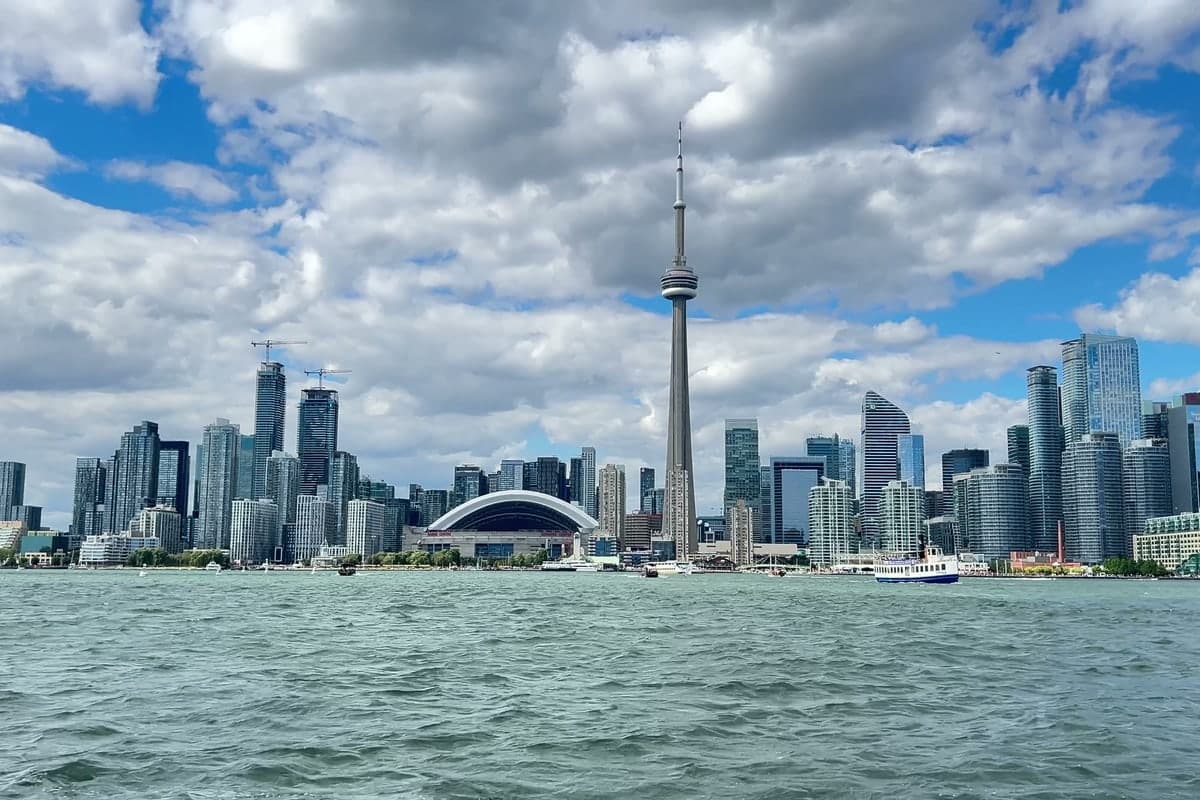
Toronto's waterfront skyline, with the CN Tower and Rogers Centre seen from Lake Ontario. Photo: Reach Out Creations via Pexels.
For most visitors, yes. Toronto is safe the way any big city is safe: use busy public routes, keep the final walk short and skip the empty shortcut at 1 a.m.
Toronto is worth the trip. Downtown gives you the Lake Ontario waterfront in the morning, St. Lawrence Market at lunch, the CN Tower at sunset and a King Street show at night. Much of that day works on foot.
That answer does not need a vague crime ranking. It needs a street-level plan that lets the city stay enjoyable. Here is ours.
Should safety worries stop you visiting Toronto?
No. Come to Toronto and plan the final part of the night as carefully as the first.
Walk the Harbourfront. Take the ferry toward the Toronto Islands. Eat through Kensington Market or St. Lawrence Market. See the skyline from the water, then catch a game, concert or show downtown.
The safety plan should take five minutes, not own the holiday. Pick a public route home before you leave, save it on your phone and get back to enjoying the city.
Which downtown Toronto streets work best after dark?
The useful distinction is not safe neighbourhood versus unsafe neighbourhood. It is active route versus empty shortcut.
These downtown routes usually give a visitor light, traffic, transit stops and open doors:
- Front Street West from Union Station to York Street. Union Station is at 65 Front Street West, and the block has station entrances, hotels, restaurants and visible foot traffic. The City's Union Station page lists the address and a security contact (416-338-8000).
- Bremner Boulevard between Scotiabank Arena and Rogers Centre on an event night. Stay on Bremner instead of slipping behind loading areas. The pavement is busy when an arena or stadium crowd is moving.
- King Street West from University Avenue to Spadina Avenue. The 504 King streetcar gives the route a visible transit spine. Use King itself, not the service lanes behind it.
- Spadina Avenue from King Street West to Front Street West. The 510 Spadina route connects Spadina Station and Union Station. Its stops are easier aim points than a back-lane shortcut.
- Queen Street West between Nathan Phillips Square and Spadina Avenue. The main sidewalk is the route. Do not let a map shave two minutes by sending you behind a closed storefront.
- Dundas Street East toward Jarvis Street. Stay on Dundas for the visible last approach. Parallel lanes are not a useful visitor shortcut after dark.
Busy is not risk-free. Toronto Police says crowds can conceal theft, so zip the bag and keep the phone out of your back pocket. The same official personal-safety page says to avoid isolated parking lots, garages and alleyways and to use well-lit, high-traffic areas.
What should you skip?
Skip the route that becomes private-looking halfway through.
The first example is the PATH at night. It is a network of links through privately controlled buildings, not one corridor with one closing time. The City says each segment is controlled by its property owner, with about 35 corporations involved. Use our honest PATH guide for daytime navigation, but do not make a closed PATH door part of the walk home.
The second is the interior path through Clarence Square when the park is empty. Clarence Square is a good small downtown park in daylight. After a late King West night, stay on Spadina Avenue or Wellington Street West rather than cutting under the tree canopy.
Also skip garage ramps, loading bays and rear lanes. This is not a verdict on a neighbourhood. It is a route choice.
Use the two-turn walk-home rule
The safest-looking line on a map is often the shortest line, not the best night route. We use a different test.
- Leave the venue on a main street with transit stops.
- Stay on that street for the middle of the walk.
- Make only the final two turns toward the building.
- Reject any shortcut through a park, garage, loading area or closed concourse.
That is the thing to repeat to a friend: the middle of the walk should be the most public part, not the quietest part. Three extra minutes on Front, King or Spadina beats a clever shortcut with no open door.
What does the TTC give you after dark?
Use the system's safety tools instead of standing at the far end of an empty platform.
Every subway platform has a Designated Waiting Area, or DWA. The TTC says each DWA has enhanced lighting, CCTV, a Passenger Assistance Intercom, benches and a payphone. Wait there when the platform is quiet.
The TTC also introduced Subway Assistance Messenger announcements on 10 June 2026. Transit Control can send a location-specific audio announcement after a concern is identified through monitoring or a report through the SafeTTC app. The TTC announcement explains the current system.
Solo bus riders get another useful tool. The Request Stop program runs from 9 p.m. to 5 a.m. Ask at least one stop ahead and the operator can let you off between regular stops where it is safe to stop. It applies to buses, not streetcars.
The subway is not a 24-hour service. The TTC publishes train service from about 6 a.m. to 1:30 a.m. Monday through Saturday, and about 9 a.m. to 1:30 a.m. on Sunday. After that, 300-series Blue Night routes cover major streets every 30 minutes or better. Check the official subway hours and Blue Night map before a late return.
For an emergency, call 911. Toronto Police lists 416-808-2222 for a non-emergency report. Those numbers are on the Toronto Police personal-safety page.
What if someone or a block feels wrong?
Do not debate it on the pavement. Cross the street, change direction or walk into an open hotel, shop or restaurant.
Toronto Police gives the same practical advice. Move toward an open, lit place with other people. If someone appears to be following you, change direction and do not approach a vehicle.
This is also why a visible main street matters more than a neighbourhood label. Bay Street can become quiet when the Financial District towers empty. Yonge Street can feel busy and messy at the same time. Neither observation predicts what happens to you. Both tell you to keep an exit option in view.
Pick the final block before you pick the suite
No StayToronto building is the default for this guide. Choose by the night you expect to have and the street you want for the last approach.
- York puts the final approach on Front Street, York Street or Bremner Boulevard in South Core and the Financial District, with the CN Tower area on the same street grid.
- Atmos keeps the final block around Front Street West and John Street in the Entertainment District.
- Parade uses Fort York Boulevard and Spadina Avenue for a CityPlace base west of the stadium blocks.
- Jarvis puts the final approach on Jarvis Street or Dundas Street East in Downtown East.
These are route descriptions, not safety rankings. The right base is the one that prevents an unnecessary cross-core walk after the night ends.
Before you go
- This reassurance does not cover a solo 2 a.m. cross-core walk after drinking, an empty park shortcut or a route through a parking garage.
- TTC closures and station hours can move. Check the live TTC service alerts before a late trip.
- Event crowds and open businesses change by date. Apply the two-turn rule to the conditions in front of you.
- No guide can promise the condition of a block. If the route feels wrong, cross the street or enter an open business.
Official sources used
- Toronto Police Service personal-safety guidance
- TTC Designated Waiting Areas
- TTC Request Stop program
- TTC subway operating hours
- City of Toronto PATH facts
- City of Toronto Union Station information
About this guide
Written by Declan Moss. Every factual claim here was checked against official Toronto Police Service, TTC and City of Toronto sources on 12 August 2026. The street-level route choices are StayToronto editorial guidance, not crime forecasts.
Choose the walk home before the booking
Toronto is worth coming to. Start with the place you expect to finish the night, then compare StayToronto's furnished short stays across downtown. Keep the final walk simple and spend the rest of the trip enjoying the city.
Frequently asked questions
Is downtown Toronto safe for tourists at night?
Yes, for a typical visitor using lit main streets and a short final walk. Front Street West, Bremner Boulevard on event nights, King Street West and Spadina Avenue are more useful walk-home routes than parks, parking garages or back lanes.
What area of downtown Toronto is safest to stay in?
Do not choose from a generic safest-area list. Choose a building that keeps the last part of your actual night on a main street. A South Core dinner, a King West show and a CityPlace visit produce three different sensible routes.
Is the TTC safe late at night?
Use the tools the TTC provides. Wait at the Designated Waiting Area, report concerns through SafeTTC, use Request Stop on a bus between 9 p.m. and 5 a.m., and know the subway's closing time before you leave.
Is Toronto safe for a solo traveller?
The same route test matters more when you are alone. Keep the middle of the walk on an active street, take only the final two turns toward the building and use a licensed ride instead of a long unfamiliar walk after subway service ends.