PATH Toronto Hours: What It Is For and When It Is Shut
By Declan Moss
The PATH does not have one opening time. It is most dependable on weekday mornings and afternoons; after dinner and on Sundays, expect locked office-tower doors and use the street.
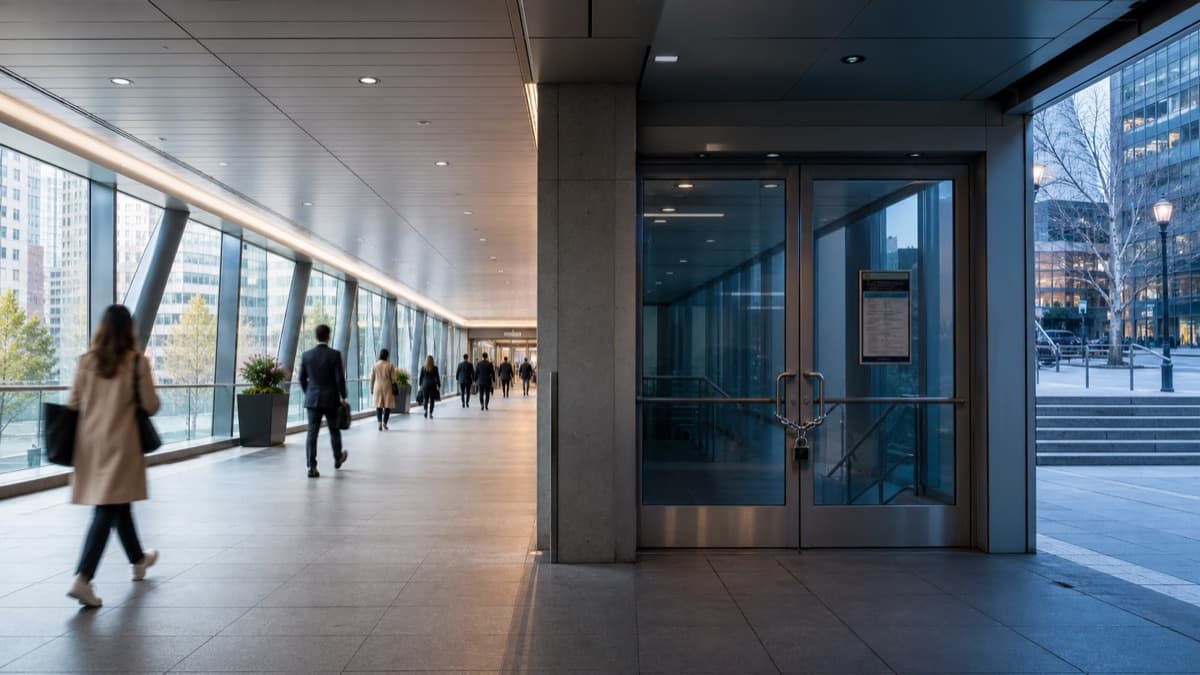
The practical contrast: an open weekday connection, one locked after-hours link and the surface route beside it.
Is the PATH open right now?
There is no honest yes-or-no answer for the whole network. The City publishes a map, not a master set of PATH Toronto hours. Each link follows the access rules of the building it passes through.
Use this rule instead:
- Weekday morning and afternoon: Use the PATH. This is the network at its most dependable.
- Weekday evening: Treat a cross-core route as unreliable. A locked glass door can break the next link.
- Saturday: Use a short section only after reading the hours at its entrance. Do not assume the next office tower is open.
- Sunday or a holiday: Start on the surface. Enter the PATH only for a confirmed short connection.
Many sections follow weekday business hours, roughly early morning to early evening. That is a practical window, not a system-wide schedule. Anyone promising a precise daily opening and closing time for all of PATH is describing a network Toronto does not have.
What is the PATH actually for?
The PATH is weekday commuter infrastructure. It moves people between offices, subway stations, Union Station and lunch counters without sending everyone onto Bay Street.
The City of Toronto's PATH page gives the scale: more than 30 kilometres, more than 75 connected buildings, six subway stations, three major department stores, nine hotels and Union Station. It also says the network serves more than 200,000 business-day commuters.
That last number explains the place better than the phrase "underground city." On a Tuesday at lunch, the corridors below Toronto-Dominion Centre, First Canadian Place, Scotia Plaza and Commerce Court have a clear job. On a Sunday, the same route can end at a locked office-tower door.
The PATH works well for a train arrival at Union, a meeting near Brookfield Place, a subway connection beneath the Financial District or a weekday walk between South Core office towers. It does not suit a weekend visitor expecting one continuous shopping centre.
Why does one PATH link close while the next stays open?
Because PATH is not one building. The City coordinates the name, map and wayfinding, but the City says each walkway segment is owned and controlled by the property it runs through. About 35 corporations are involved.
The Toronto Financial District BIA makes the same ownership split plain. Most of the space is private property in the basements of about 75 properties. The spaces between buildings are generally City-owned.
That is why one lit concourse proves nothing about the next door. Brookfield Place can be accessible while a later office link on your intended route follows a different schedule. Hours vary by building. The sign fixed to the exact entrance outranks a generic travel article.
How do you follow the PATH without getting trapped?
Think in buildings and destinations, not Toronto's street grid. The corridors do not reproduce the streets above.
Use the colour-coded P-A-T-H signs and the larger destination labels. The Financial District BIA says the current system uses coloured pathways and long-distance markers such as "Waterfront." Its January 2026 simplified PATH map shows the main network and connecting routes.
These are the landmarks that matter:
- Union Station anchors the south end of the central network.
- Brookfield Place, Commerce Court, Toronto-Dominion Centre, First Canadian Place and Scotia Plaza form the Financial District core.
- RBC Centre and One York sit in South Core.
- CF Toronto Eaton Centre is on the northern side of the mapped network.
- The SkyWalk reaches west toward Rogers Centre and the CN Tower.
Do not treat the P-A-T-H letters like compass directions. Follow the named destination, then confirm the next building before committing to another indoor block.
Where should you stay if PATH access matters?
Stay close to the part you will use, not to the idea of an "underground city." The PATH is centred on the Financial District and South Core. York suites at 12 and 14 York Street sit on the South Core end of the network near Union Station.
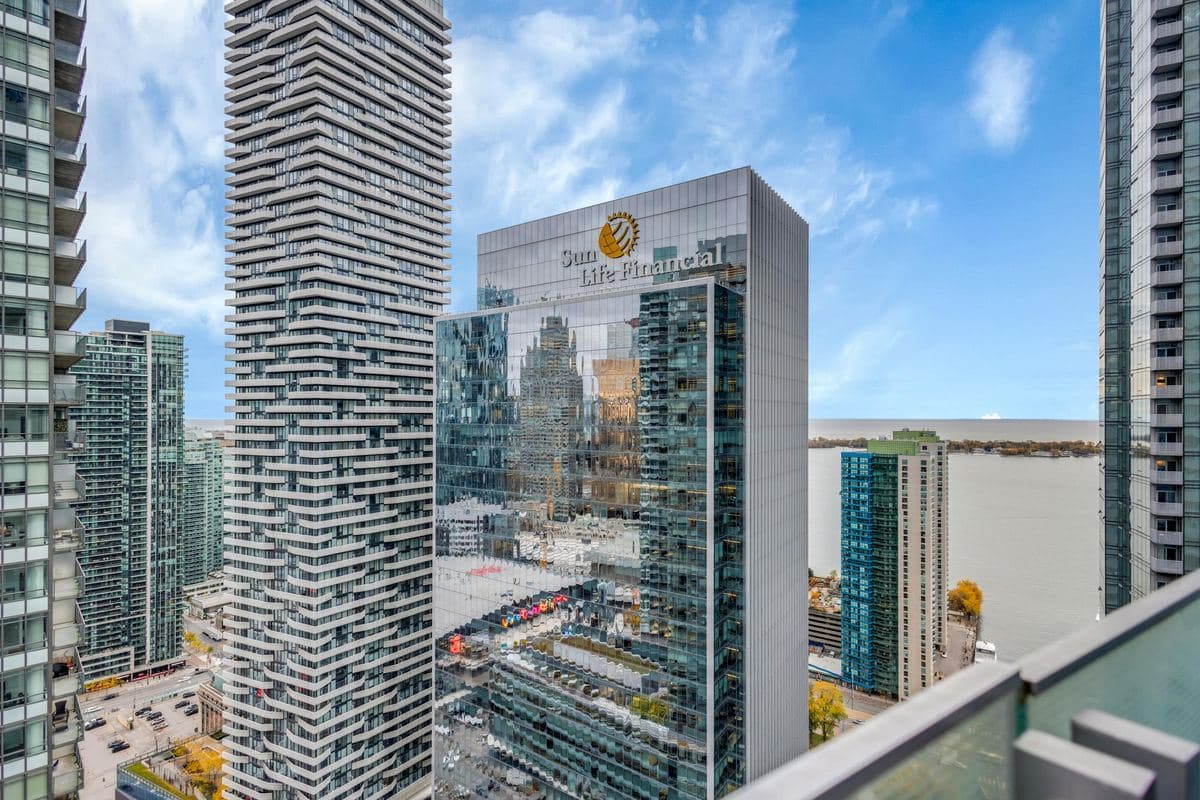
South Core from one real StayToronto York studio. This is the view from one suite, not a promised view from every York stay.
At the west end, the mapped SkyWalk connection reaches the Rogers Centre and CN Tower side of downtown. Our CN Tower and South Core guide covers that pocket above ground.
A suite near PATH does not turn the network into a 24-hour hallway. Including ours. Location solves the first block. The building owners still control the doors after that.
Who should skip the PATH?
Skip it on Sunday if the plan depends on crossing several office towers. Skip it after dinner if being late matters. Skip it as a tourist attraction if the shops are the point of the trip.
The PATH also does not suit anyone who needs a guaranteed continuous indoor route at a fixed time. A dead end underground is not dangerous, but it wastes time. Go back to the last street exit and finish the trip above ground.
This is the position: use PATH for a weekday job. Use Toronto's surface streets for a Sunday journey.
The one-minute test at any PATH entrance
Before going down the escalator, do three things:
- Read the operating hours posted on that exact glass door.
- Name the next two buildings on the route, not just the final destination.
- Identify the surface street that runs toward the same destination.
If the return trip falls outside the posted hours, take the surface from the start. That small check is more useful than any claimed system-wide timetable.
Before you go
- Check the hours posted at the exact PATH entrance you plan to use.
- Save the current official simplified map before leaving Wi-Fi.
- Keep the parallel surface route ready for evenings, weekends and holidays.
- Access and retail hours can change by property.
Official sources
- City of Toronto PATH facts, ownership and history
- Toronto Financial District BIA PATH ownership and wayfinding FAQ
- Toronto Financial District BIA official PATH maps
The PATH is a City-coordinated network through privately owned buildings. StayToronto is not affiliated with PATH, the City of Toronto, the Toronto Financial District BIA or any named building. The names are local reference points only. Each property controls its own access and hours.
About this guide
Written by Declan Moss. Every fact here was checked against an official source on 10 August 2026, and the links are in the text.
Start with the part of downtown you need
Compare StayToronto's current downtown furnished stays, then choose the surface or PATH route that still works at the hour you will use it.
Image note: the lead visual is an AI-generated concept created with OpenAI, not documentary photography of a real PATH entrance. The York-suite view is a real StayToronto photograph. No stock imagery.
Frequently asked questions
Is the Toronto PATH open 24 hours?
No. PATH has no system-wide opening schedule. Individual building owners control the links through their properties, so a route that works during the weekday can be broken by a locked office-tower door after hours.
Is the Toronto PATH open on Sunday?
Some short sections are accessible, but do not rely on a continuous Sunday route through several office towers. Start on the surface and use PATH only after confirming the exact entrance and next building are open.
What are the usual PATH Toronto hours?
The practical window is weekday business hours, roughly early morning to early evening, but this is not an official network timetable. Hours vary by building, and the sign at the exact entrance is the final authority.
What is the PATH actually for?
PATH is a downtown commuter network linking offices, Union Station, six subway stations and major buildings. It serves more than 200,000 business-day commuters and works best for weekday movement through the core.
Does the PATH reach the CN Tower and Rogers Centre?
The official January 2026 simplified map shows the SkyWalk connection reaching the Rogers Centre and CN Tower end of downtown. After hours, keep the parallel surface route available because connecting-building access varies.