How Short-Term Rentals Work in Downtown Toronto
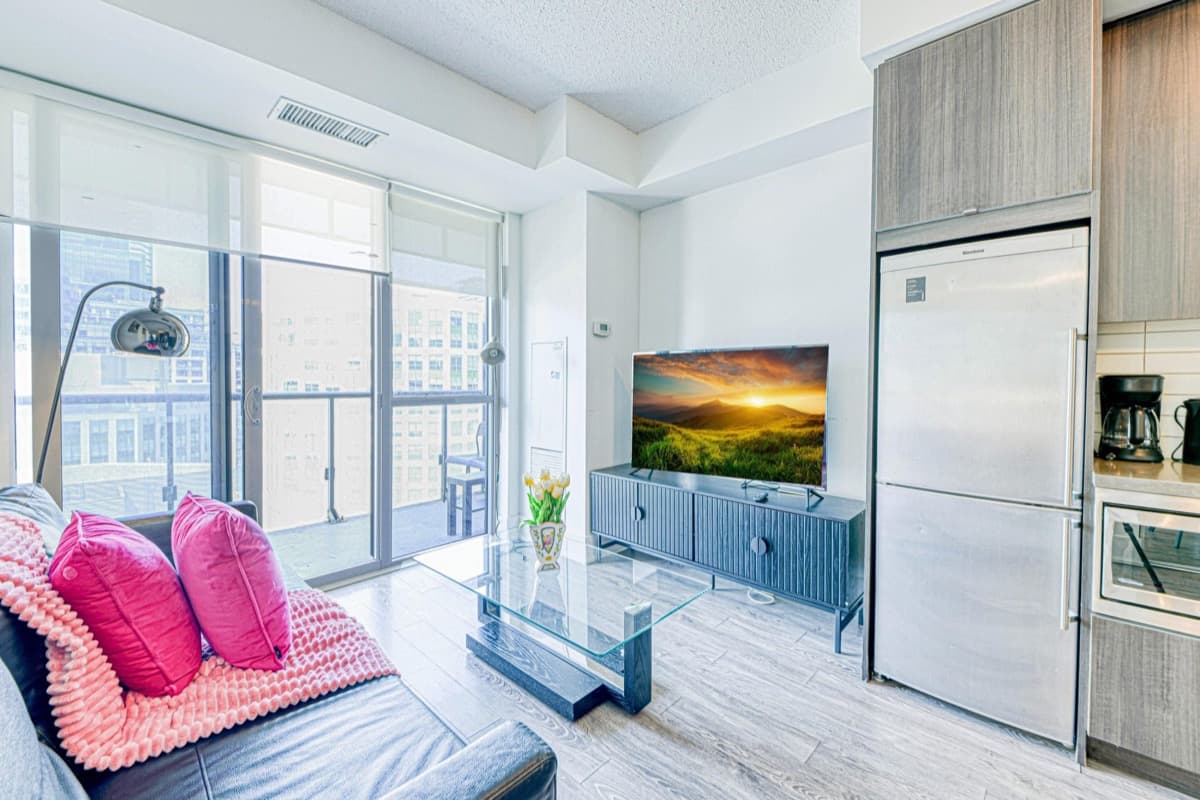
A short-term rental can look simple on a listing page: choose dates, choose a condo, pay and arrive. The important details sit between those steps. How many nights can you book? What is actually inside the suite? Who lets you in? And which part of downtown will make the trip easier?
If you are planning a short stay in Toronto for the first time, think of the rental as a furnished home base rather than a hotel room with a different name. You gain a kitchen, laundry and living space, but you also need to read the listing, arrival instructions and house rules more carefully.
The short answer: how does a downtown short-term rental work?
The usual sequence is straightforward:
- Search your exact dates and guest count.
- Choose a layout and downtown area that fit the trip.
- Check the minimum stay, total price, cancellation terms and confirmed inclusions.
- Book through the operator’s direct site or a marketplace.
- Receive the confirmation and arrival instructions.
- Follow the building-access and checkout directions for that specific suite.
StayToronto’s downtown short-term rental options start from one night. Some suites ask for a short minimum during peak summer weeks and major events, so the live result for your dates and guest count is still the deciding source.
How many nights do you need to book?
“Short-term” does not tell you the minimum by itself. One operator may accept a single night; another listing or set of dates may require more. Do not infer the rule from the category name or from a rate shown without dates.
For StayToronto, the published minimum is one night, with the peak-period exception above. Enter the real arrival and departure dates before comparing options, then confirm:
- the minimum accepted for those dates;
- the check-in and checkout times;
- whether the quoted total covers the full stay;
- the cancellation and payment terms; and
- the maximum registered guest count and actual bed setup.
A one-night stay can work when location is the main need. A few nights make the daily-use features more important: breakfast in the suite, somewhere to sit away from the bed, and laundry when Toronto weather changes the packing plan.
What is typically included in a furnished stay?
“Furnished” should mean more than a bed and a sofa. StayToronto’s short-term-rental page lists a full kitchen, fast Wi-Fi, a smart TV, fresh linens and towels, and usually in-suite laundry; utilities are included in the rate. Exact layouts and smaller supplies vary, so the individual listing remains the source of truth.
Before paying, look beyond the wide room photos. Confirm the bed types, seating, kitchen appliances, cookware, towels, work surface and any supplies you expect to use. A smart TV does not automatically include a paid streaming subscription. A kitchen does not promise every small appliance. Laundry does not necessarily mean detergent is supplied.
The room-by-room checks belong in the separate guide to what a furnished Toronto rental actually includes. Use that list when a listing looks attractive but leaves practical gaps.
Booking direct, through Airbnb or at a hotel: what changes?
The accommodation may look similar across channels. The booking relationship is different.
With a direct booking, you reserve with the operator. That gives you a direct path for questions about the layout, arrival and fit before you commit. You still need to read the cancellation, payment, deposit and house rules shown at checkout.
With Airbnb or another marketplace, the platform sits between guest and operator for the reservation and its platform process. That may be useful if you prefer a familiar account and review system. Compare the final total and the terms for the same suite and dates; the first nightly rate is not the whole decision. The existing Toronto direct-booking and Airbnb-alternative guide covers that comparison without turning this article into another platform review.
A hotel is often the cleaner fit when you want services you have confirmed with the property, such as a staffed front desk or housekeeping during the stay, and you do not expect to use a kitchen or in-suite laundry. If cost is the main question, use the full short-term rental versus Toronto hotel cost comparison rather than comparing two headline rates.
What happens after you book?
Read the confirmation when it arrives. A downtown condo does not necessarily work like a hotel lobby, and there is no single check-in process across every building.
Your arrival information should answer four questions:
- Where do you go first?
- How does building and suite access work?
- When can you enter?
- Who do you contact if travel is delayed or the instructions do not work?
Save the instructions and contact details somewhere you can reach without searching through old messages at the entrance. If you are arriving late, carrying bulky luggage or need parking, ask about that before travel day. Do not assume a front desk can change the operator’s check-in time, store bags or solve a booking issue.
Once inside, compare the suite with the listing while support is easy to reach. At checkout, follow the written directions for access items, dishes, garbage and departure time. Specific instructions beat habits carried over from another rental.
Which downtown Toronto area fits a short stay?
Downtown Toronto is compact on a map but not interchangeable on a busy day. Start with the place you need to reach most often, then choose the area around it.
Financial District and South Core
This is the practical base when a rail arrival in South Core, Bay Street meetings or nearby offices anchor the trip. The Financial District stay page is the useful starting point when you want to keep mornings focused on the business core rather than crossing downtown.
Entertainment District
Look here when the trip revolves around King Street West, theatres, restaurants or the west side of the core. The Entertainment District guide helps separate that location choice from the general question of how a rental works.
CityPlace and the waterfront side
CityPlace suits plans that lean toward Bathurst Street, the waterfront or the western side of the core. It feels different from staying among the office towers even when both are called downtown. Use the CityPlace neighbourhood page to judge that fit.
Downtown East
Downtown East is the relevant base when Yonge and Dundas, Dundas Street East or the Garden District is the daily anchor. The Downtown East stay guide covers that side of the core.
Do not choose by a landmark you might visit once. Choose for the route you will repeat in the morning, then check the evening plans from there.
Is a furnished short-term rental right for your trip?
It is worth a closer look when you want to make simple meals, do laundry, share the stay without spending every hour in one room, or settle into a normal routine for a few nights.
A hotel may suit you better when the trip is very brief, you value on-site service more than residential space, or you want a check-in routine that the chosen hotel can confirm. Neither format wins automatically.
Before deciding, ask:
- Does the minimum stay match my dates?
- Is every sleeping surface clearly described?
- Are the kitchen, laundry setup, Wi-Fi, linens and towels confirmed?
- Does the final total include all mandatory charges shown at checkout?
- Can I follow the arrival process at my actual arrival time?
- Is the neighbourhood close to the place I will visit most often?
- Do I know the cancellation terms and support contact?
When those answers are clear, the booking stops feeling unfamiliar. Start with StayToronto’s short-term-rental page, then browse current furnished stays across downtown once you have dates, guest count and a neighbourhood in mind.
Sources and booking note
- StayToronto’s live short-term-rental page — source for the one-night baseline, the peak-period minimum caveat, and the listed inclusions: full kitchen, fast Wi-Fi, smart TV, fresh linens and towels, usually in-suite laundry, with utilities in the rate.
- StayToronto’s live neighbourhood pages — local context for the Financial District, Entertainment District, CityPlace and Downtown East.
- Airbnb Help Centre: How pricing works for homes — official guidance to support checking the total price and disclosed charges rather than relying on a search-screen nightly rate.
- Exact availability, minimum nights, totals, policies, layout and supplies must be confirmed in the live listing and booking flow for the selected dates.
StayToronto is not affiliated with Airbnb or any hotel or booking platform. Airbnb is named only because travellers commonly compare marketplace and direct-booking routes. Confirm current prices, fees, policies, services and availability with the relevant provider before booking.