Fall in Toronto without a car: ravines, gardens and where the leaves turn
By Declan Moss
By Declan Moss · 27 August 2026
Do the Don Valley ravine in the morning and finish on Ward's Island with the skyline on the return ferry. That is the Toronto fall day worth building around. It gives you wet leaves underfoot, old brick beside a quarry pond, lake wind and the city coming back into view.
Do not add High Park to the same day. It sits on the other side of the city and turns a good route into a transit exercise.
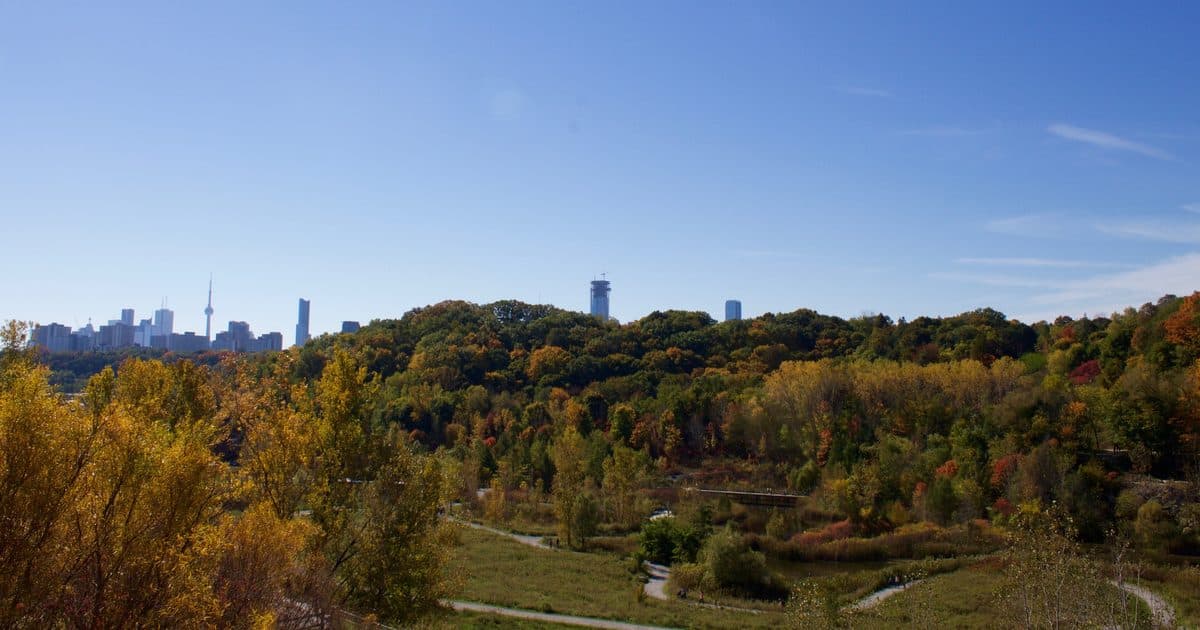
Evergreen Brick Works from the quarry lookout in October. Photo: mark.watmough, CC BY 2.0.
The one-day fall route I would actually do
Morning: Broadview Station to Evergreen Brick Works
Take Line 2 to Broadview Station. The free Evergreen shuttle leaves from the Erindale Avenue parkette beside the station every 30 to 45 minutes. It runs seven days a week, all year, and drops you at Evergreen Brick Works, 550 Bayview Avenue.
Start behind the heritage buildings in the Weston Family Quarry Garden. The former industrial site retains 16 heritage buildings beside a 16-hectare public park of wetlands, wildflower meadow and hiking trails.
Brick walls, sumac and the dark quarry pond share one frame. That combination is pure Toronto.
Keep this part unhurried. Walk the quarry paths and climb toward the lookout.
If you want a longer natural-surface hike, make Crothers Woods the whole morning instead. The City maps about 10 kilometres of trails there, including the 1.3-kilometre Sun Valley Trail with one steep 100-metre section.
Midday: Broadview back to the waterfront
Ride the free shuttle back to Broadview. From there, take Line 2 west to Bloor-Yonge, change to Line 1 south and get off at Union. Walk south on Bay Street to Queens Quay.
One tapped adult TTC fare is $3.30 and includes transfers for two hours when you use the same PRESTO card, debit card, credit card or mobile wallet. Cash is $3.35 and does not include the two-hour window. After a full morning in the ravine, expect to pay a new fare for the ride downtown.
Carry lunch. The point of this day is the outdoor route, not another market or indoor stop.
Late afternoon: Ward's Island and the ferry back
The Jack Layton Ferry Terminal is at 9 Queens Quay West, 100 metres south of the Bay Street intersection. Buy the ticket online. An adult round trip is $9.57, and the same ticket can return from any island dock.
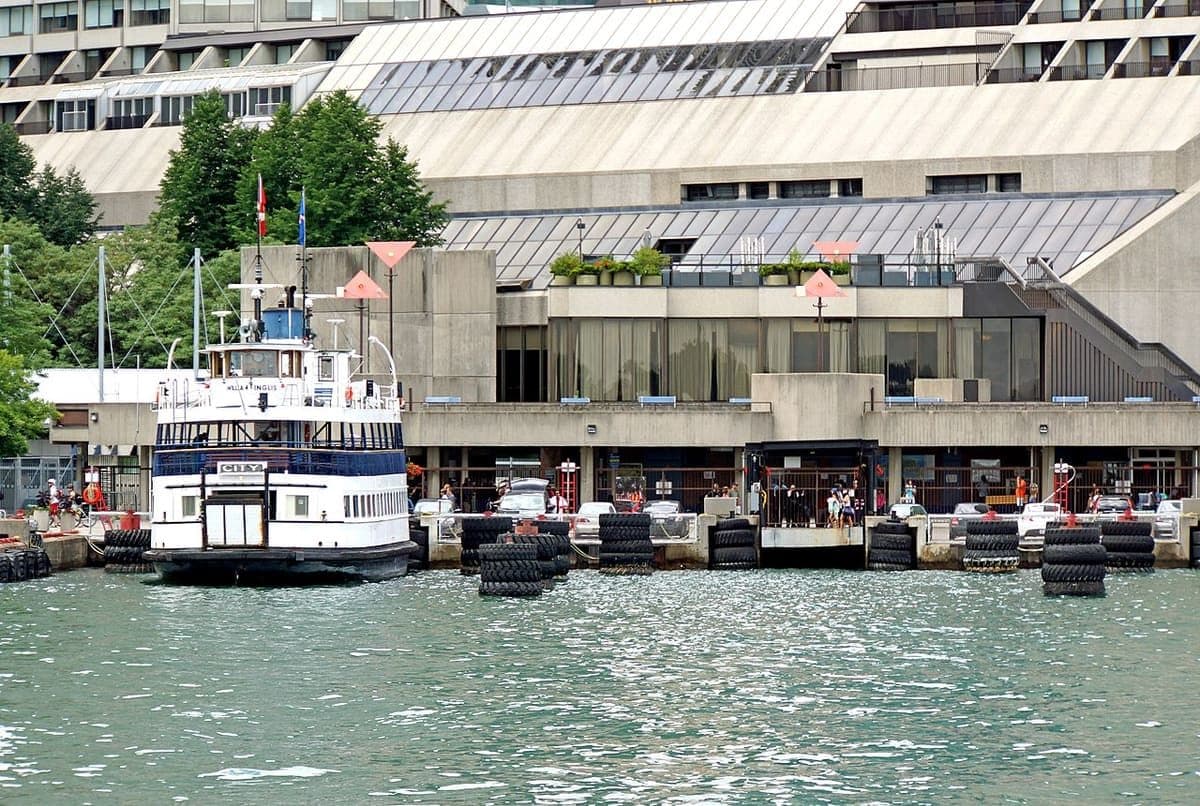
The William Inglis at Jack Layton Ferry Terminal. Photo: Dennis G. Jarvis, CC BY-SA 2.0.
Take the Ward's Island boat. Centre Island is the crowded default. Ward's gives you a native shrub and perennial garden beside the dock, a five-minute walk to Ward's Island Beach and access to the 1.5-kilometre boardwalk along Lake Ontario.
Turn around before the walk becomes a march. The return ferry is the finish, not transport dead time.
Stand outside. The skyline grows from a thin grey line into the CN Tower, the South Core and the waterfront towers.
This ordering is the route trick. Ravines lose useful light first. The harbour keeps it.
Put the enclosed valley at the start and the open-water skyline at the end.
When do Toronto leaves actually turn?
Use a window, not a promised peak weekend. The City's guide to Toronto trees, shrubs and vines says native leaves begin changing by the end of September. Most native deciduous species have dropped their leaves by the end of October.
That makes the first three weeks of October the practical target. Maples, dogwoods, chokeberry, serviceberry, apple and sumac supply reds and oranges. Oaks turn bronze.
Introduced Norway maples and weeping willows can hold their leaves into November, but that is the late tail, not a reason to book a single "peak" date.
Weather still writes the final version. Heat and dry conditions can bring early colour. Wind and heavy rain can strip it.
Which other car-free leaf stops are worth a separate day?
High Park for oak colour and a long western walk
High Park is the obvious name for a reason, but go for the landscape, not a generic leaf photo. About two-thirds of the park remains natural. Its roughly 23 hectares of tallgrass savannah, prairie and woodland form Toronto's main remnant of this rare ecosystem.
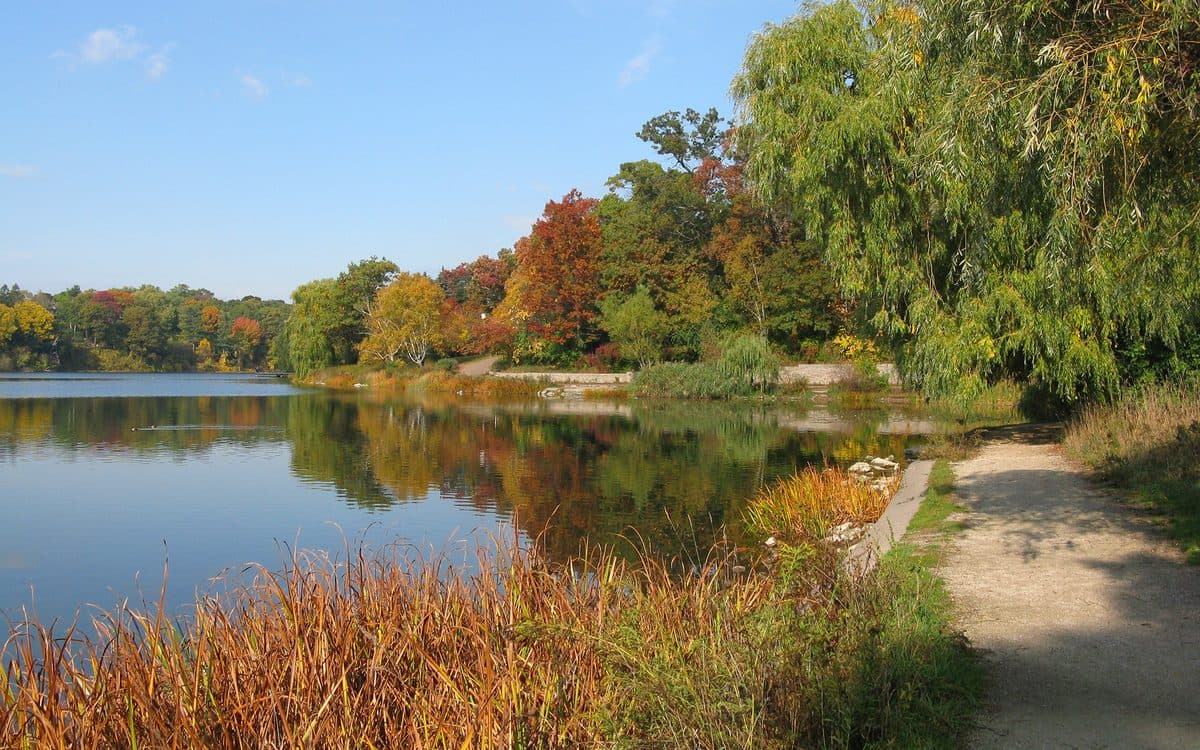
Grenadier Pond in High Park on 24 October. Photo: Diego Torres Silvestre, CC BY 2.0.
Enter from High Park Station on Line 2. The seasonal 203 High Park bus runs into the park, while the 506 Carlton streetcar reaches High Park Loop.
Walk the Black Oak Savannah, the Hillside Gardens and the edge of Grenadier Pond. Stay on formal trails. The oak savannah is the exhibit, not a shortcut.
High Park deserves its own half-day. Skip it on the Brick Works and ferry route.
Toronto Botanical Garden for a garden-first day
The Toronto Botanical Garden at 777 Lawrence Avenue East has 17 themed outdoor gardens with native and pollinator-friendly planting. Admission is free and the gardens are open from dawn to dusk.
Next door, Edwards Gardens at 755 Lawrence Avenue East adds perennials, roses, rhododendrons, rockery and the Wilket Creek valley. From downtown, take Line 1 to Lawrence Station and the 162 Lawrence-Donway bus to Lawrence Avenue East at Leslie Street. The subway and bus transfer remain one TTC fare when you tap the same card or device.
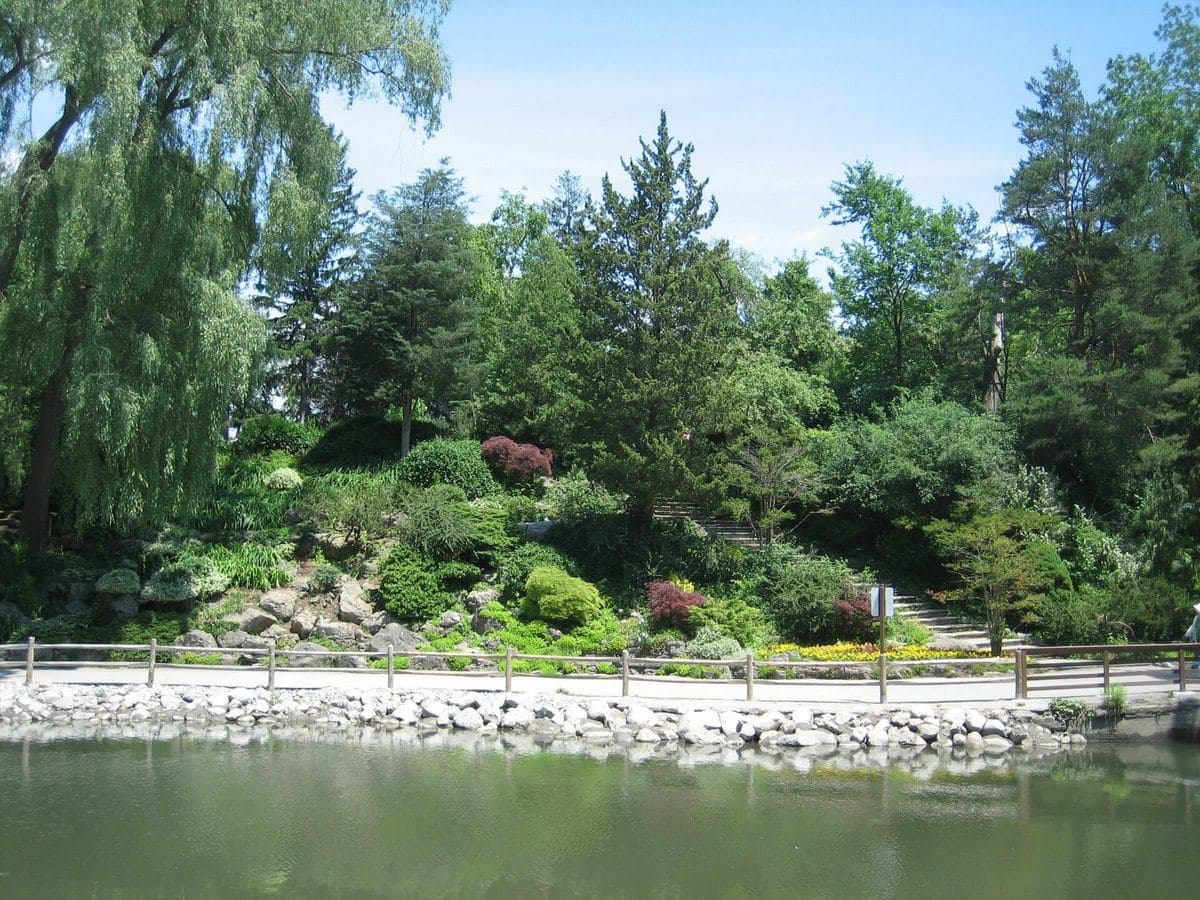
The rock garden at Edwards Gardens. Photo: SimonP, CC BY-SA 3.0.
Choose this instead of Brick Works if plants matter more than a rugged trail. It is also the better answer for someone who wants an outdoor fall morning without crossing the city twice.
Toronto Music Garden for a short waterfront version
The Toronto Music Garden is at 479 Queens Quay West. Its paths and planting interpret Bach's Suite No. 1 for unaccompanied cello through ornamental grasses, perennials, shrubs and a small boreal-forest section.
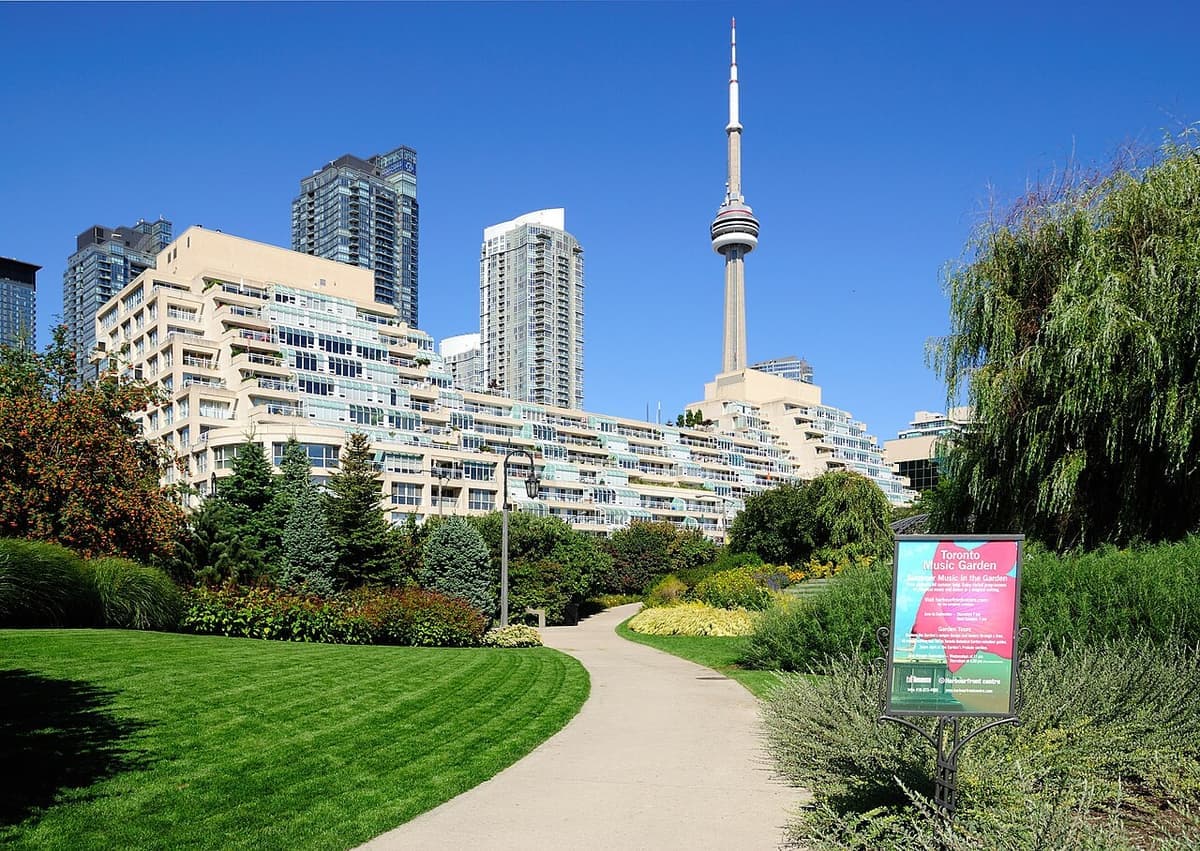
The waterfront at Toronto Music Garden, with the CN Tower beyond the marina. Photo: Raysonho, CC0 1.0.
Walk there along Queens Quay or take the 509 Harbourfront streetcar. Pair it with the waterfront trail, not an indoor attraction. This is the shorter waterfront version of a Toronto fall day.
Who should skip the ravine-to-ferry day?
Skip it if you need a step-free, low-walking day. Toronto ravine routes include stairs, slopes and uneven surfaces, and the Ward's boardwalk adds another 1.5 kilometres. Use the Toronto Music Garden and Queens Quay waterfront as the shorter outdoor version.
Also skip it in cold, steady rain. Wet roots and fallen leaves make the ravine slower, while the open ferry deck becomes a test of your shell rather than part of the day.
The day suits walkers who are comfortable with several outdoor hours and a separate ferry fare. It does not suit someone trying to tick High Park, the Brick Works and the Islands off one list before dinner.
Official sources
- City of Toronto: trees, shrubs and vines biodiversity guide
- Evergreen Brick Works: getting there
- City of Toronto: trails and Crothers Woods
- City of Toronto: High Park
- Toronto Botanical Garden: plan your visit
- City of Toronto: Toronto Island ferry schedules
- City of Toronto: getting around Toronto Island
- TTC: fares and transfers
Before you go
- Check the Toronto forecast for wind and steady rain 48 hours before the walk.
- Check the ferry page again. The 2026 fall schedule starts 16 September with reduced service on all three routes, and the exact fall timetable was not posted on 27 August.
- Confirm the Evergreen shuttle in its live tracker before leaving Broadview Station.
- Check the Toronto Botanical Garden access page for current Wilket Creek and Edwards Gardens path closures.
About this guide
Written by Declan Moss. Every fact here was checked against an official source on 27 August 2026, and the links are in the text.
StayToronto, if you need a downtown base
Pick the route first. Then choose the side of downtown that makes its first or last leg easier.
- Parade in CityPlace fits the west-waterfront side near the Toronto Music Garden.
- Atmos in the Entertainment District keeps Queens Quay and the downtown transit spine close.
- York in South Core is the closest fit for Union Station and the walk to the ferry terminal.
- Jarvis in Downtown East points toward Broadview and the Don Valley start.
Compare all four StayToronto downtown stays. None turns the ravine or Islands into a doorstep outing.
StayToronto is not affiliated with the City of Toronto, the TTC, Evergreen, Toronto Botanical Garden or any park or venue named here.
Frequently asked questions
What is the best time to see fall colours in Toronto?
Target the first three weeks of October. City guidance says native leaves begin changing by the end of September and most native deciduous species have fallen by the end of October. Weather can shift the colour within that window.
Can you visit Toronto ravines without a car?
Yes. Take Line 2 to Broadview Station and Evergreen's free shuttle to the Brick Works, or use the TTC to reach High Park, Crothers Woods and the Toronto Botanical Garden. Each TTC journey can fit on one fare when all transfers happen within two hours and you tap the same card or device.
Is High Park or Evergreen Brick Works better for fall leaves?
Choose Evergreen Brick Works for the one-day route in this guide because it pairs naturally with Broadview transit and the ferry finish. Choose High Park for a dedicated western half-day with Black Oak Savannah, Hillside Gardens and Grenadier Pond.
Are the Toronto Islands worth visiting in fall?
Yes. Ward's Island has a garden at the dock, a 1.5-kilometre boardwalk and the skyline on the ferry back. Fall service runs less often than summer, so build the visit around the posted return sailing.
Do I need a PRESTO card for this route?
No. Tap the same debit card, credit card or mobile wallet on every TTC vehicle and station gate. The $3.30 adult fare includes a two-hour transfer. The island ferry is a separate ticket.